
Convenient Waste Solutions Help Create Cleaner Shared Spaces
Keeping parks, campuses, and other shared environments clean starts with making proper disposal convenient. Thoughtful placement and purpose-built waste solutions can encourage better habits while simplifying everyday maintenance.
Keeping shared spaces clean isn't only about how often they're maintained.
It's also about making proper disposal easy.
Whether visitors are walking their dogs through a community park or students are moving between buildings on a busy campus, convenient waste solutions help encourage responsible behavior while making everyday maintenance more manageable.
The right products, placed in the right locations, can make a noticeable difference.
1. Convenience Encourages Better Habits
People are more likely to properly dispose of waste when a receptacle is easy to find and convenient to use.
That's why placement matters just as much as the product itself.
Consider waste solutions near:
- Building entrances and exits
- Walking paths and trailheads
- Outdoor gathering areas
- Dining and commons areas
- Parking areas
- Athletic facilities
- High-traffic campus walkways
Making disposal part of a visitor's natural path helps encourage cleaner behavior without requiring additional direction.
2. Dog Waste Stations Support Cleaner Parks
As parks and trails welcome more visitors with pets, dedicated dog waste stations provide an important convenience.
Combining accessible waste bags with a nearby disposal point makes it easier for pet owners to clean up and helps reduce waste left along trails, lawns, and other shared spaces.
Strategically placed stations can help:
- Encourage responsible pet ownership
- Keep walking paths and green spaces cleaner
- Simplify maintenance for park staff
- Create a more enjoyable environment for all visitors
Small amenities can have a significant impact on how clean and welcoming a park feels.
3. Campuses Need Solutions Built for Heavy Daily Use
Educational environments experience concentrated periods of traffic throughout the day.
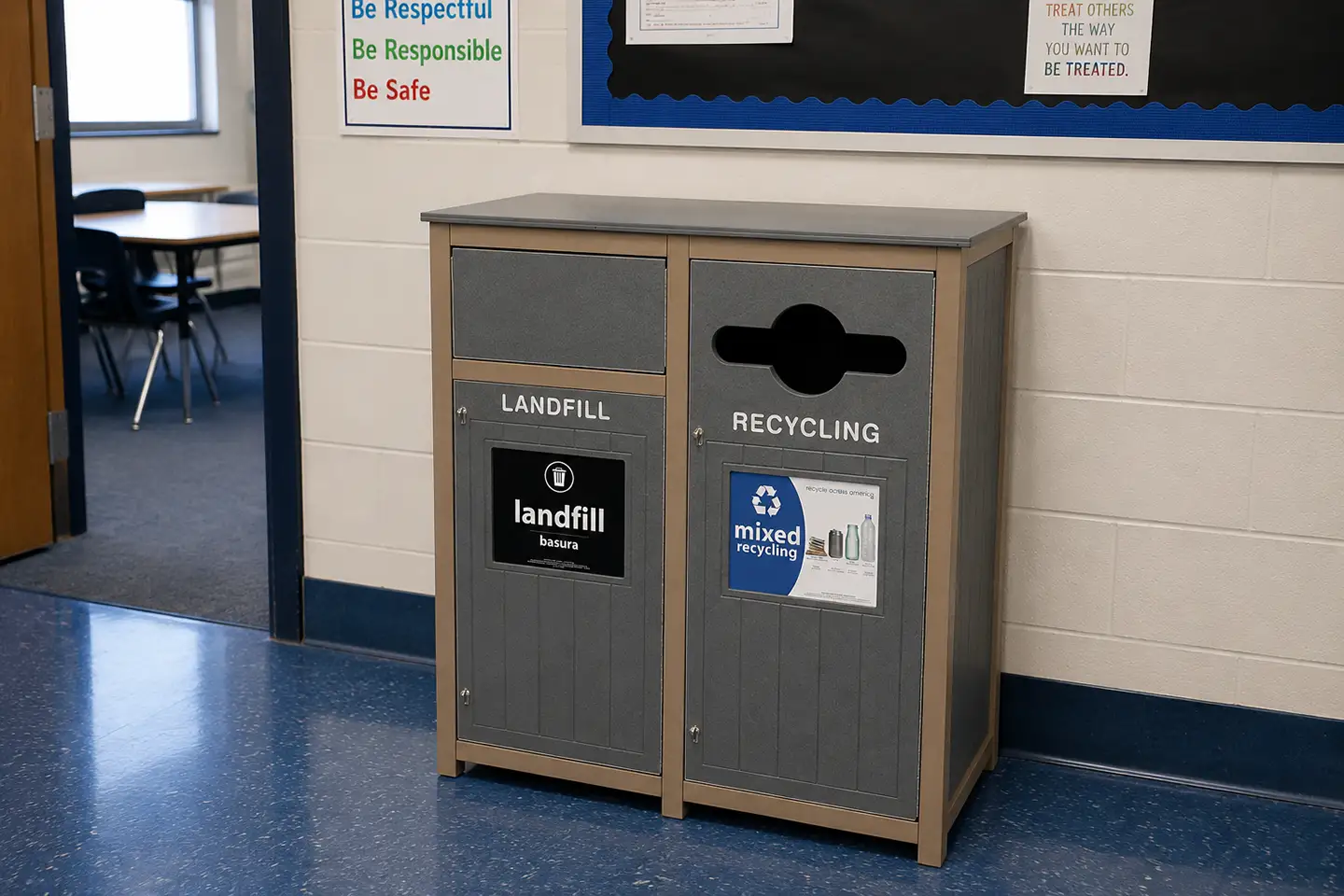
Waste enclosures positioned around entrances, dining areas, residence halls, athletic facilities, and outdoor gathering spaces help campuses manage that volume while keeping disposal areas organized.
Purpose-built enclosures can also conceal liners and containers, helping waste areas feel more intentional within the surrounding campus environment.
4. Clear Identification Makes Disposal Easier
Waste and recycling systems work best when users can quickly understand where items belong.
Clear openings, labels, colors, and graphics help distinguish waste streams and make disposal more intuitive.
For facilities managing both waste and recycling, consistent identification across the property can help:
- Reduce confusion
- Encourage proper sorting
- Create a cohesive appearance
- Support campus or community sustainability initiatives
The simpler the system is to understand, the easier it is for visitors to participate.
5. Durability Simplifies Long-Term Maintenance
Public waste solutions need to withstand constant use, changing weather, and frequent servicing.
Durable materials and thoughtful construction help reduce maintenance while keeping shared spaces looking polished over time.
Choosing products designed for demanding environments can help facilities:
- Reduce repairs and replacements
- Maintain a consistent appearance
- Simplify routine cleaning
- Support year-round outdoor use
Cleaner shared spaces begin with thoughtful planning.
From dog waste stations along park trails to waste and recycling enclosures throughout school campuses, making proper disposal convenient helps encourage better habits, simplify maintenance, and create environments that everyone can enjoy.
Interested in custom furnishings for your facility?